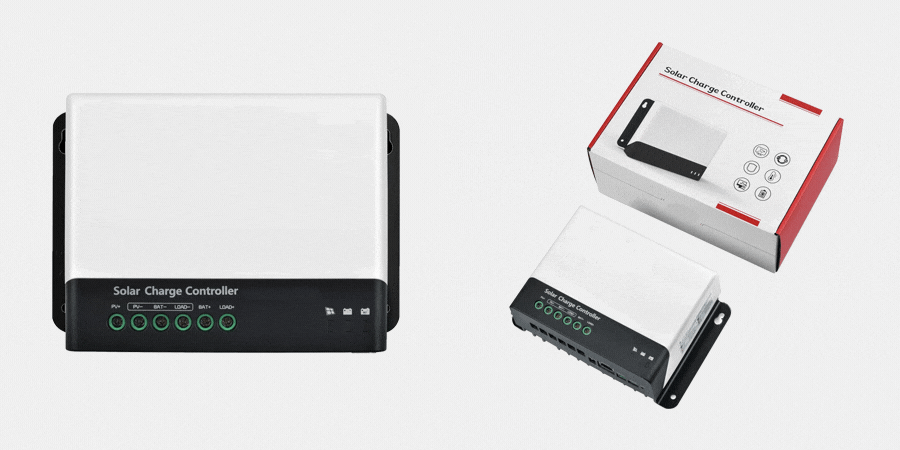
LC2430N10H
Main Features
1. With the PowerCatcher MPPT technology, the controller is able to track the maximum power point of solar panels even in a complex environment. It has a higher response speed and tracking efficiency compared with those controllers with traditional MPPT technology.
2. MPPT tracking efficiency is up to 99.9%. The maximum power point tracking algorithm can significantly improve the energy utilization efficiency of photovoltaic systems. The charging efficiency is 15% to 20% higher than the conventional PWM method.
3. Automatic charging voltage regulation function: When there is a battery open circuit or lithium battery BMS overcharge protection, the controller battery terminal will output at the rated charging voltage value.
4. The output constant voltage value for loads is optional in 12V/24V, making it ideal for voltage-sensitive loads.
5. When the battery is damaged or lost, the PV system can directly supply power to the load.
6. Two operating modes are available: charging priority and load priority. That is, the solar panel is available to preferentially charge the battery or supply power to the load.
7. Advanced limited current charging mode allows customers to use the solar panel that exceeds the rated power.
8. Controller with a common negative electrode design can be applied to a negative electrode earthing system.
9. Advanced digital power technology raises the circuit energy conversion efficiency to 98%.
10. Charging procedures of various types of batteries such as lithium battery, gel battery, sealed battery, and vented battery are supported.
11. It adopts a dual serial port design, i.e. isolated 485 communication port and TTL communication port, and supports standard Modbus protocol to meet the communication needs of different occasions.
12. The controller can be connected with the LCD screen or Bluetooth module or remote GPRS module so that users can not only check operating data and status but also modify the controller parameters.
13. The controller has an overheat protection mechanism. When the temperature exceeds the set value, the charging current will decline in linear proportion, and discharging will be shut off so as to curb the temperature rise of the controller and keep the controller from being damaged by overheat.
14. Featuring a temperature compensation function, the controller can automatically adjust charging and discharging parameters in order to extend the lifespan of the battery.
15. Solar panel short circuit protection, charging over current protection, load short circuit protection, overload protection, battery open-circuit protection, overheat protection, and TVS lightning protection, etc. are available.
technical details